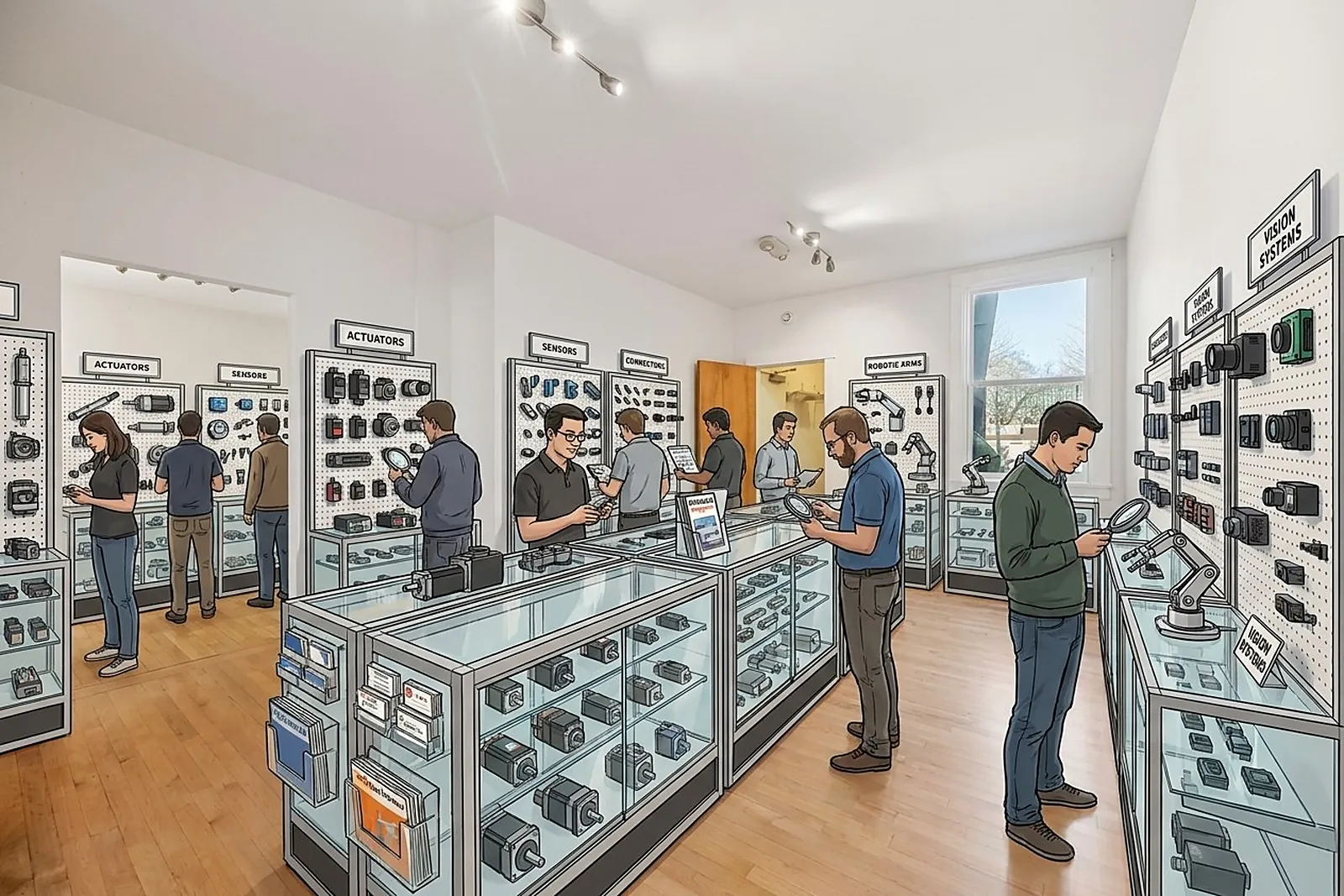
Six industries. Six different ways to walk the floor.
A robotics team and a medical-device team need almost nothing in common from the same building. These guides cover what each industry sources here, which floors matter, and what to ask before you leave.

Robotics
Robotics programmes live and die on drivetrain lead times and on end-effector decisions nobody can make from a datasheet. Both problems are physical,…
Sourcing guide →
AI hardware
The hard parts of AI hardware are not the accelerators — they are power delivery, thermal, high-speed interconnect and the enclosure that has…
Sourcing guide →
Industrial automation
Automation integrators do not have a sourcing problem so much as a comparison problem: twelve credible vendors per component, all claiming the same…
Sourcing guide →
Medical devices
Medical device sourcing is a documentation exercise as much as a component one. The question is rarely ‘does this part work’ — it…
Sourcing guide →
Drones & mobility
Everything in a drone or a light EV is a mass budget argument. Sourcing is where that argument is won: a better motor, a lighter structure or a…
Sourcing guide →
Consumer hardware
Consumer hardware is where sourcing decisions become manufacturing decisions. The display you pick determines the bezel; the switch you pick…
Sourcing guide →The floor is broader
than six industries.
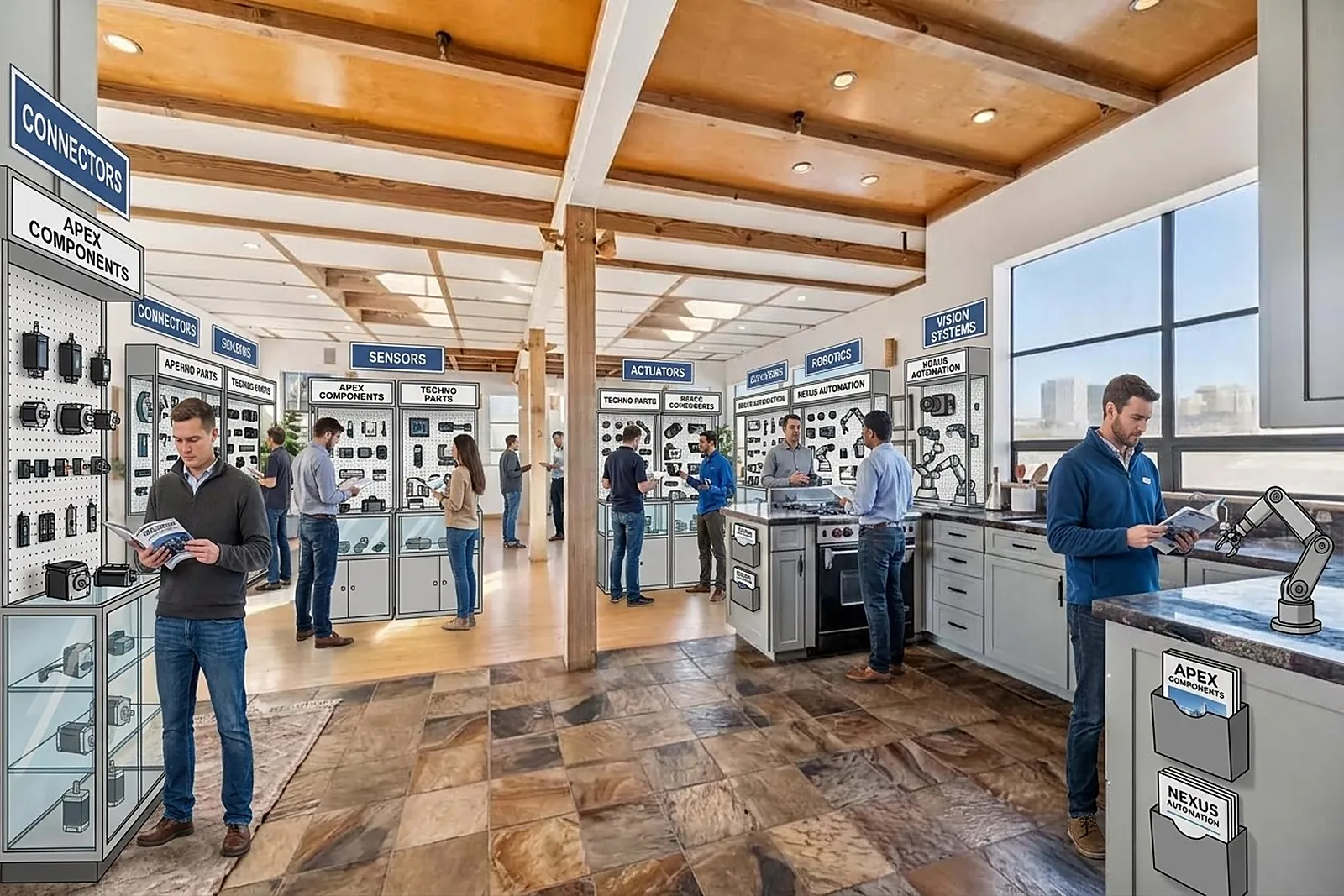
Semiconductor equipment, lab automation, agricultural robotics, marine, energy storage, test and measurement — if your product has a bill of materials with motors, sensors, screens, connectors or machined parts in it, most of the building is relevant to you.
Tell us what you build when you pre-register and we will point you at the right three aisles.
Your BOM has parts
on this floor.
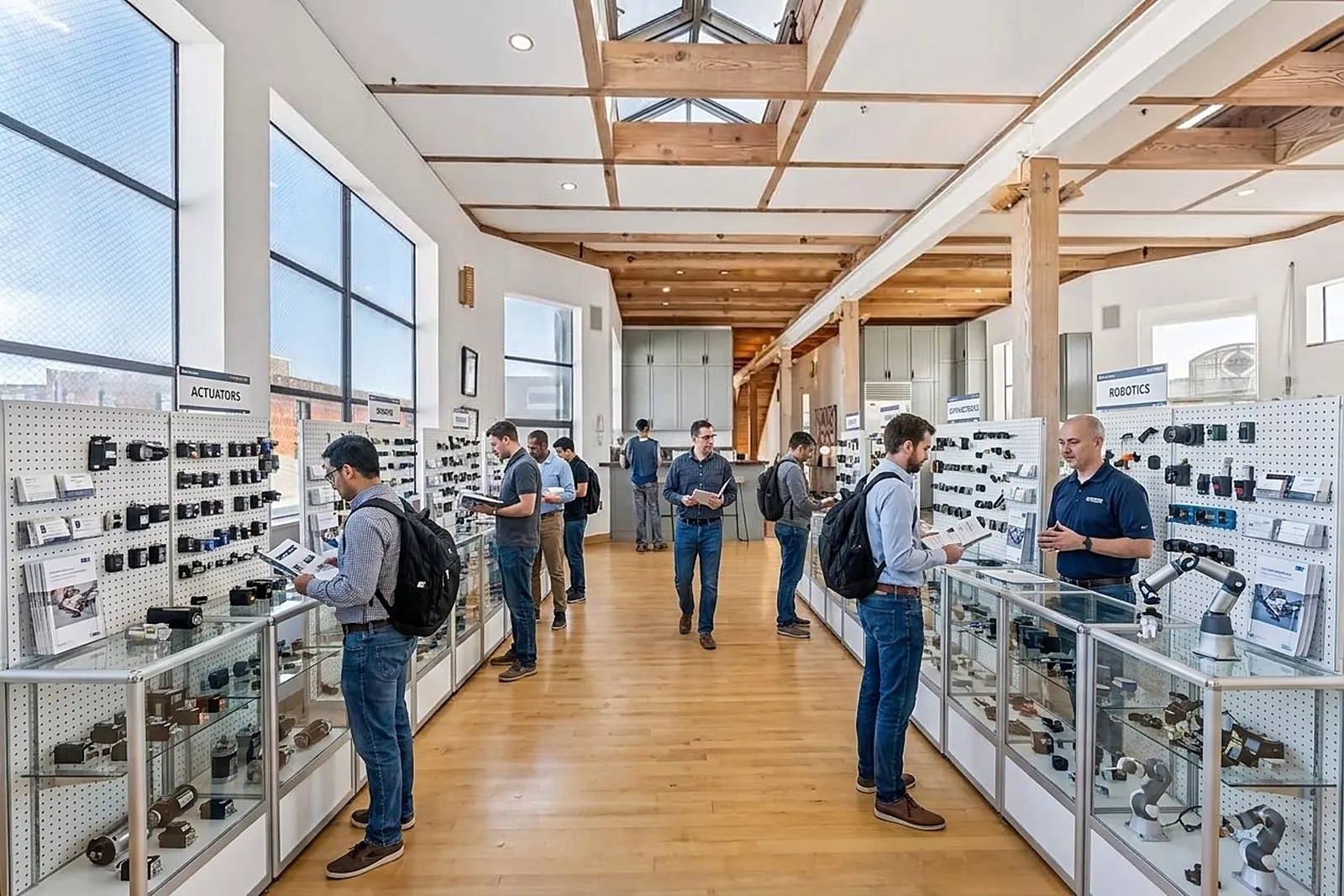
Whatever you build, the sourcing problem is the same: too many options, not enough of them in your hands.